

I still remember the first cold morning that made me rethink engine oil. I stepped out of my garage in Ohio, watched my breath float in the air, and heard my car crank like it had stayed up all night. That was the day I started digging into what type of oil is best for my car, and this is the simple version of what I learned through real use, small mistakes, and a few laughs along the way.
I am not here to push brands or hype anything. This is just what worked for me after years of driving in heat, cold, dust, rain, and all the weird stuff we get in real U.S. weather.
How I Figured Out the Right Oil for My Car
Let me walk you through the start, because this is where most people get stuck.
I Began With the Owner’s Manual
I know… no one loves reading that book. I didn’t either. Mine sat in the glove box for years with old receipts stuffed inside.
But one day, while I waited for a friend outside a small shop in Indiana, I opened it out of boredom.
Inside, I found the exact oil grade. It was short and clear. And it changed everything.
Why it matters:
- Every car has a set oil grade
- It shows the needed viscosity
- It lists the right certifications (API, ILSAC)
Once I followed the grade, my engine sounded smoother. Not a miracle. Just… smoother. Like it was less annoying to me.
I Learned What Those Numbers Mean
When I first saw “5W-30,” it felt like a math quiz. But it’s very simple.
- “W” means winter
- The first number shows how fast oil flows in cold starts
- The second shows how thick it stays when hot
In cold states like Minnesota, I had to use oils that flow fast at the start. In hot places like Arizona, the engine needed thicker oil when hot.
That small detail made a big difference when I drove along Phoenix roads one summer. The heat there feels like you’re opening an oven.
I Looked at My Engine Type
At one point, I drove a small four-cylinder car that hated thick oil. Later, I owned a turbo engine that loved synthetic. I noticed a few things:
- High-mileage engines like thicker oils
- Turbo engines stay happier with full synthetic
- Older engines sometimes do better with gentle blends

One winter morning, I heard a light tapping sound. That led me to switch to a slightly heavier oil. The tap went away like it was never there. Small win, but it felt good.
What I Learned About Oil Types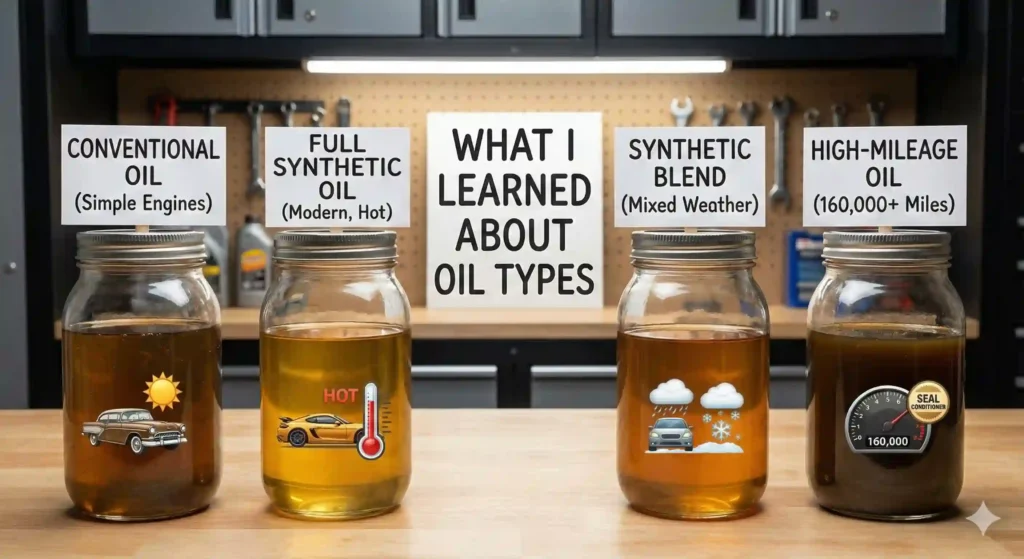
This is where things got clearer for me. The labels on the shelf finally made sense.
Conventional Oil
I used this in my older car years ago. It worked fine for short trips and slow life.
- Good for simple engines
- Works for light use
- Breaks down faster in heat
When I moved to humid Florida for a few months, it didn’t hold up well. The heat and traffic felt rough on the engine. That’s when I started using synthetic.
Full Synthetic Oil
This is what most modern cars love now. And honestly, so do I.
- Flows fast in cold starts
- Stays strong in heat
- Great for long drives
- Good for engines that run hot
On a July day in Nevada, when the road looked like it was melting, my engine still felt calm with synthetic oil. It surprised me.
Synthetic Blends
This is like a midpoint. I used it when I wanted good protection without a high cost.
- Balanced performance
- Handles mixed weather
- Better than conventional
If you drive in states with mixed seasons like Missouri or Kansas, blends work pretty well.
High-Mileage Oil
My old sedan hit 160,000 miles. It burned a little oil. Not a lot. Just enough to annoy me. High-mileage oil helped slow that down.
These oils have:
- Seal conditioners
- Additives to fight burn-off
- A smoother feel on cold starts
It kept that old engine running without sounding tired.
Why Climate Changed My Oil Choice
Your location in the U.S. really affects oil behavior.
Cold Weather
In places like Michigan or Wisconsin, mornings feel like ice. My engine hated thick oil on cold starts. So I used:
- 0W-20
- 5W-20
These flow fast when the engine wakes up.
Hot Weather
Texas heat made thin oils break down fast. My car felt louder. The engine ran hotter. So I used:
- 5W-30
- 10W-30
They stay stable when the day feels like a giant hair dryer.
Mixed Seasons
Most of the Midwest sits here. One month of snow. Next month sun.
Multi-grade oils worked best because they adjusted to the swing without me needing to switch.
My Simple Rule When Buying Oil
This one rule saved me from guessing.
I check three things:
- The correct viscosity
- The right API or ILSAC mark
- The type (synthetic, blend, etc.)
That’s it. No overthinking. No standing in the aisle staring at bottles like I’m decoding a secret code.
FAQs of What Type of Oil Is Best for My Car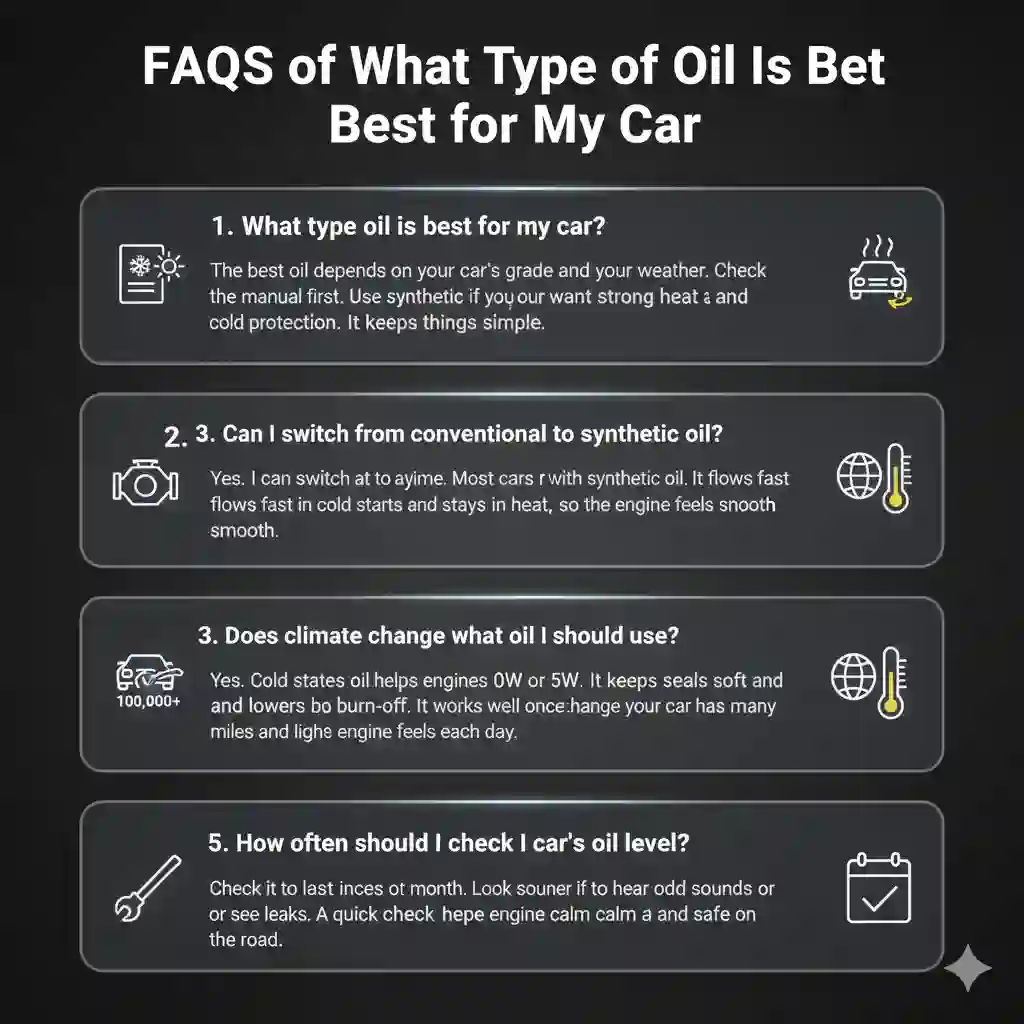
1. What type of oil is best for my car?
The best oil depends on your car’s grade and your weather. Check the manual first. Use synthetic if you want strong heat and cold protection. It keeps things simple.
2. Can I switch from conventional to synthetic oil?
Yes, you can switch at any time. Most cars run well with synthetic oil. It flows fast in cold starts and stays strong in heat, so the engine feels smooth.
3. Does climate change what oil I should use?
Yes. Cold states need thin oil like 0W or 5W. Hot areas need thicker oil to stay strong. Your location can change how the engine feels each day.
4. Is high-mileage oil good for older cars?
High-mileage oil helps engines with wear. It keeps seals soft and lowers burn-off. It works well once your car has many miles and light signs of age.
5. How often should I check my car’s oil level?
Check it at least once a month. Look sooner if you hear odd sounds or see leaks. A quick check helps keep the engine calm and safe on the road.
Final Thought
If you like simple care and want your car to run smoothly in heat or cold, the right oil can help a lot. If you need special care for an older engine, you may want to look at other options too. From what I’ve seen, picking the right oil feels small, but it makes each drive calm and easy.