
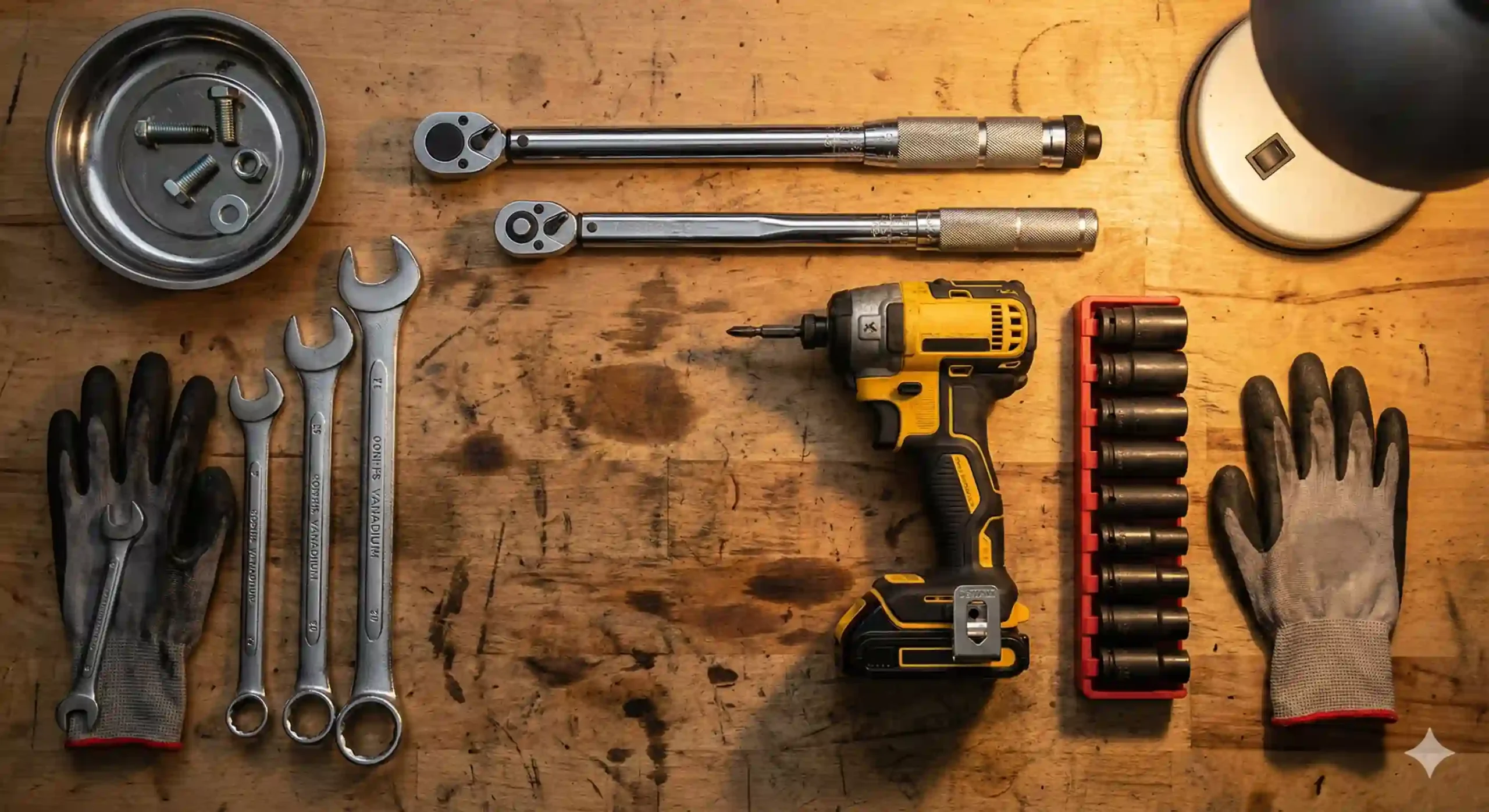
I learned pretty fast that the right car repair tools can turn a stressful Saturday into a calm job that feels almost fun. I grew up working in small garages and weird spaces that never had the tool you needed. Sometimes, I worked on a car in a humid Florida shop where sweat made wrenches slippery. Other times, it was a cold driveway in the Midwest that made metal feel like ice. Tools matter. Good tools help you work safe, fast, and with less pain. I don’t worship brands, but I understand why people trust names like Milwaukee or DeWalt. They hold up under real use, and that builds confidence.
Working on cars is not about perfection. It is about trying, learning, and dealing with loud metal things that never cooperate. The tools you pick change that experience. Good grip, strong steel, safe torque levels, and solid build quality help you do work you can trust. And at the end of the day, that is all I want.
The Essential Car Repair Tools Every DIYer Should Own
This section is for the tools I reach for when my car makes a weird noise on a normal Tuesday night. They are simple, common, and useful. They do not fix everything, but they handle most of the jobs that show up without warning.
Socket Set and Wrenches
A socket set is the start. Most U.S. cars need both standard and metric sizes. I keep ratchets, extensions, and adapters because cars never give you straight access. The first time I held a good ratchet, I loved the hard click sound. Cold metal in your hand feels solid. You feel like you can fix anything.
- Standard and metric sockets
- Extensions for tight spots
- Ratchet with smooth action
Screwdrivers and Pliers
You need both flathead and Phillips. Cars have so many random screws that you never expect. Long-nose pliers help with tight spaces. Side cutters help with wires and plastic clips that break at the worst time. Tools that feel light help a lot when your hands are tired.
Floor Jack and Jack Stands
A floor jack changes everything. It lifts fast. Jack stands keep you safe. I still remember lifting a car on gravel in July heat. The jack was hot, the ground felt unstable, and I questioned my life choices. Use ANSI/OSHA approved stands because failure is not funny. Safety matters even when you are in a rush.
Torque Wrench
A torque wrench keeps you from stripping bolts or over-tightening parts. Cars have factory specs for a reason. I learned that the hard way with a ruined bolt that cost more than the wrench. Good torque feels smooth and controlled. It makes work feel professional.
Building a Reliable Car Tool Kit for Your Garage or Trunk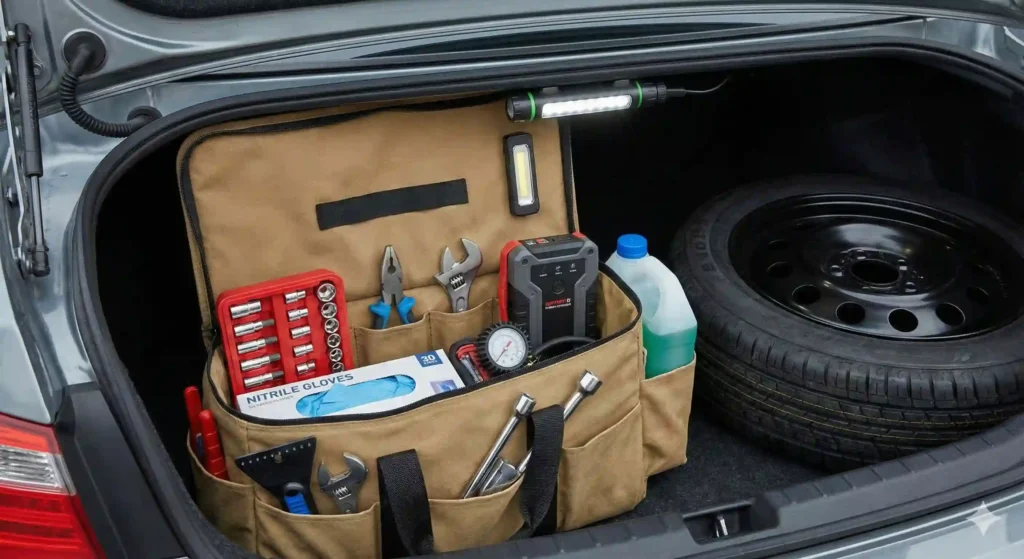
A small car tool kit saves you more times than you think. I have been stuck in grocery parking lots, on late-night highways, and outside a friend’s house because I forgot I loaned tools out. A simple kit helps you get home without stress.
Hand Tools You Should Always Keep in a Kit
I keep basic tools in a bag in my trunk. Sockets, pliers, and an adjustable wrench fix small problems. Gloves are great on cold winter mornings. Cold metal and bare hands do not mix well.
- Socket set
- Pliers
- Adjustable wrench
Safety Gear and Consumables
Nitrile gloves keep your hands clean. Shop towels clean mess fast. I also keep spare fuses, bulbs, and a tire gauge. Small items fix annoying problems that stop your car in dumb ways.
Tools That Save the Day When You’re Stranded
A jump starter is a life saver. Cables work too, but only if someone stops. A lug wrench helps with flats. I also like a flashlight with a magnet mount. Working in the dark on a cold road is awful.
- Jumper cables or jump starter
- Lug wrench
- LED flashlight
Weather and Region-Based Picks
Where you live changes what you need. Snow belt drivers need an ice scraper and traction pads. Desert heat means coolant and water in the trunk. Coastal areas need rust protection because salt kills metal fast.
Must-Have Tools for Mechanics Who Work Weekly
These tools show up when you fix cars all the time. You stop being a casual user and start buying gear that makes big jobs easier. You do less guessing and more doing.
Impact Tools and Air Compressors
Impact tools are fast. They remove bolts with less effort. They are loud, heavy, and addictive. I used mine so much that my neighbors asked if I was building a race car. A small compressor works well for tires and air tools.
Specialty Automotive Tools
You do not need all specialty tools. But some save you hours. I use brake tools and cooling system testers more than I expected. Belt tensioners are also nice because belts never cooperate.
Diagnostic Tools and Scanners
An OBD2 scanner helps a lot. The check engine light comes on more than it should. Scanners tell you if it is a big issue or a small glitch. I hate seeing “random misfire” on Monday mornings.
Workstation Setup
A rolling cart keeps tools close. Magnetic trays stop bolts from vanishing into the engine bay. Good lights help you see real damage. Dark garages hide a lot of mistakes.
Automotive Repair Tools for Common DIY Jobs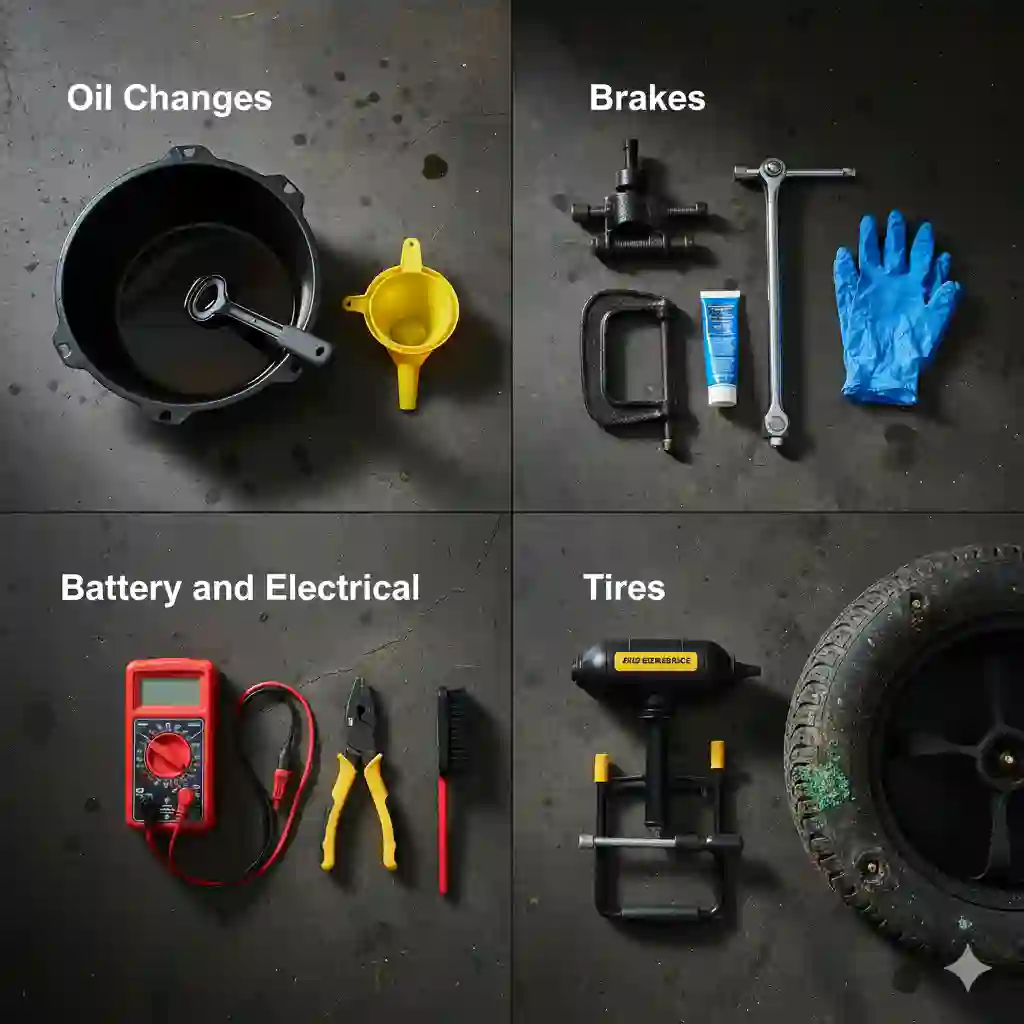
These tools match the jobs that show up in everyday garages in the U.S.
Oil Changes
I use a drain pan, funnel, and filter wrench. Oil stains concrete fast, and it smells strong. I once spilled oil at 2am and spent an hour cleaning it.
Brakes
A C-clamp, torque wrench, and brake grease help you do safe work. Brake dust is gross, so gloves make the job easy.
Battery and Electrical
A multimeter helps test power. Wire strippers help with clean cuts. Corrosion smells bad and looks worse.
Tires
A tire inflator and plug kit help anytime. I fixed a flat in the rain once, and it felt like punishment.
Safety, Quality, and Buying Tips That Actually Matter
Bad tools break fast. A broken wrench can hit your face or hand. It becomes a weapon.
U.S. Standards and Certifications
Look for ANSI marks. OSHA safety rules help with lifting, jack stands, and eye protection.
Materials and Build Quality
Chrome vanadium steel is strong. Grip texture and knurling help you hold tools with wet hands.
Buy vs. Borrow vs. Rent
Some tools are expensive and used once. Auto parts stores rent tools. It saves money.
Maintenance and Storage
Clean tools last longer. Oil moving parts. Florida humidity kills steel fast. I learned that with rusted pliers.
FAQs Of Car Repair Tools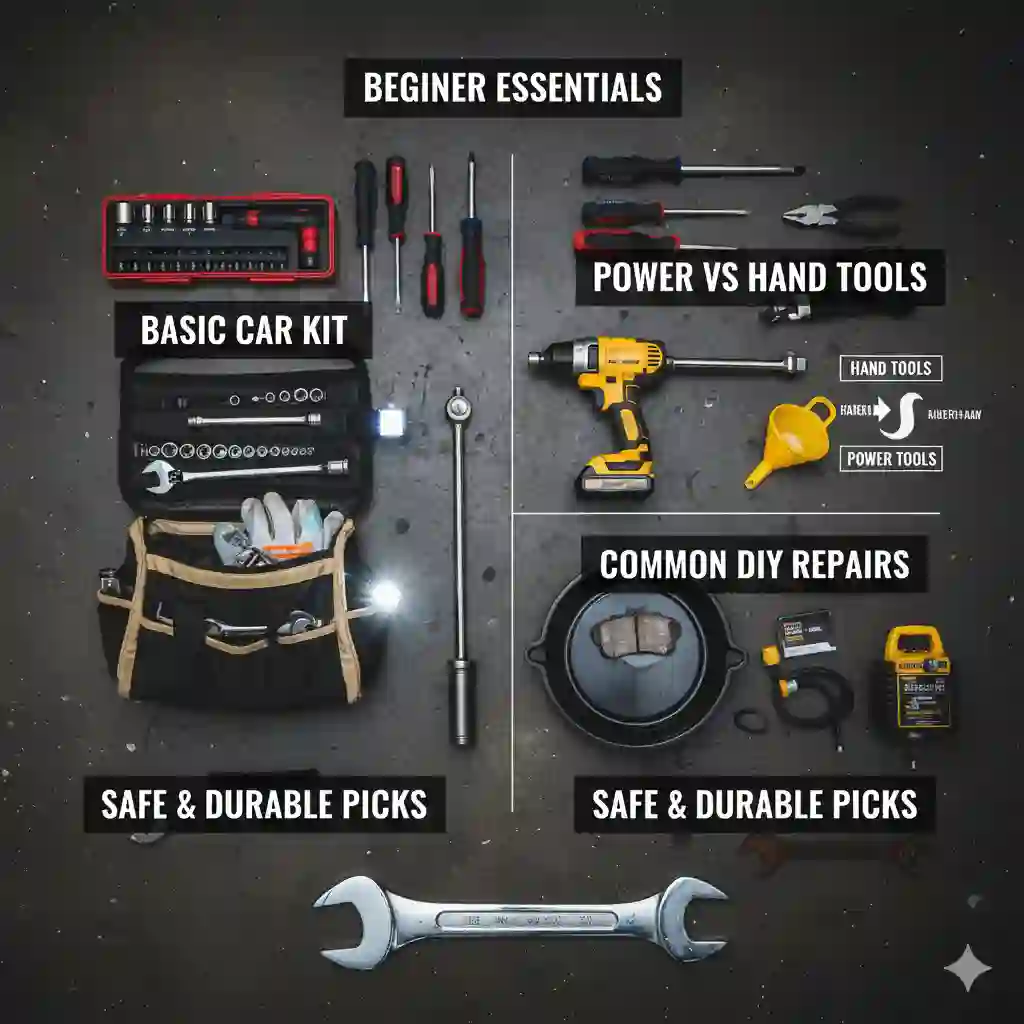
1. What are the best car repair tools for beginners?
Good car repair tools for beginners include a socket set, screwdrivers, and pliers. They help with small repairs fast. They fit in a small bag and work on most cars.
2. What should I keep in a basic car tool kit?
A car tool kit should have sockets, pliers, a wrench, gloves, and a flashlight. These tools help with fast fixes on the road or at home when small problems show up.
3. Do I need power tools for car repair?
Power tools help you work fast but they are not required. Hand tools fix most jobs. Impact tools save time when you work on cars often.
4. What automotive tools help with common DIY repairs?
Oil tools, brake tools, and a tire inflator help with daily jobs. They help you fix leaks, brakes, and flats fast. They work for most DIY mechanics.
5. How do I pick safe and durable car repair tools?
Look for strong steel and safe grip. Good tools feel solid and last longer. They help you work with less risk. Cheap tools can bend or break.
Final Thoughts on Car Repair Tools for Real Life
Tools do not make you a mechanic, but they help you trust your work. Some days everything goes smoothly. Other days you drop a socket into the engine bay and swear at physics. That is normal. And weirdly fun.