
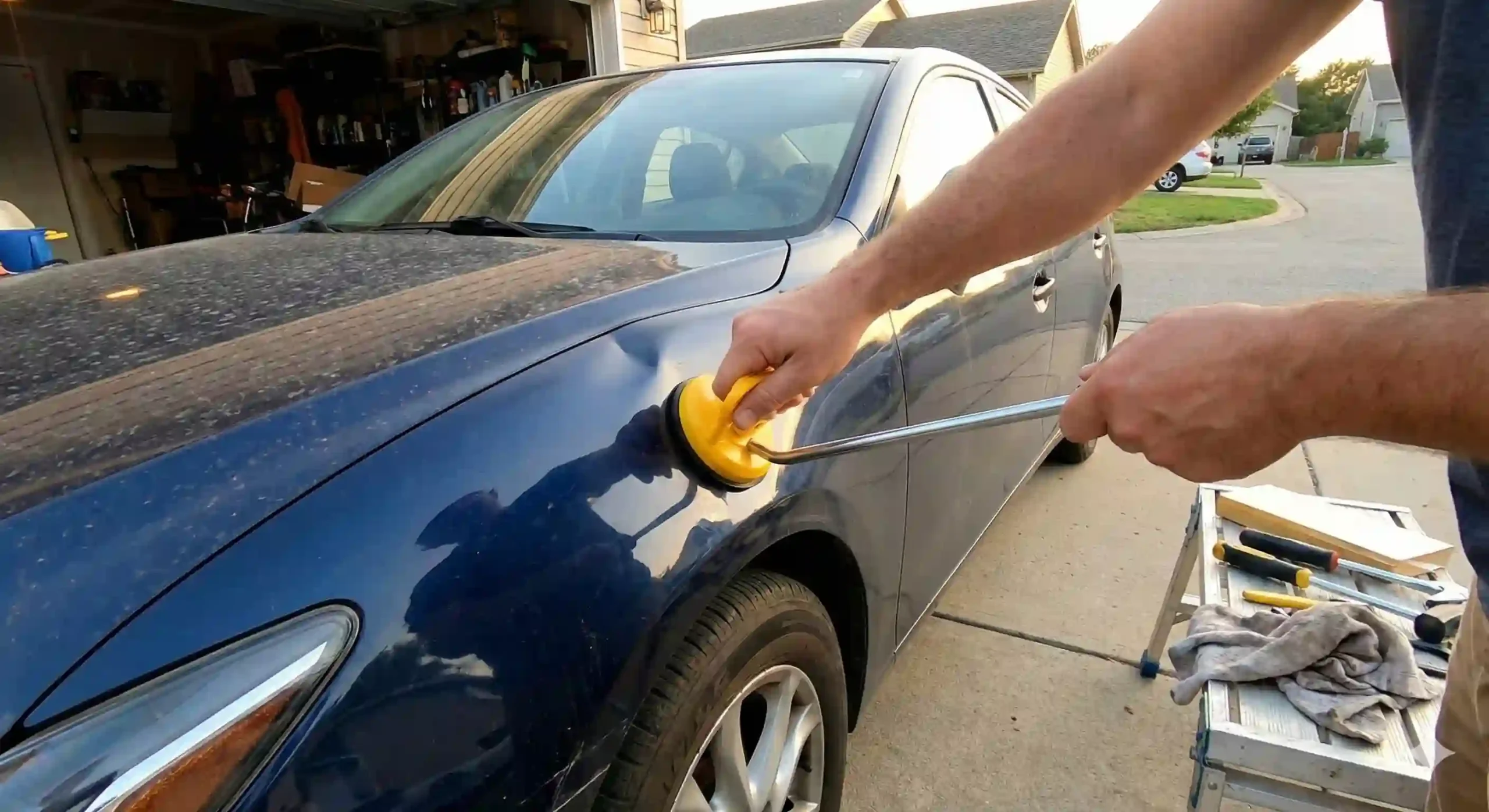
I’ve spent a lot of weekends fixing dents in my own driveway. Some days the sun was bright and warm, like a July afternoon in Florida. Other days I was in a cold garage in the Midwest, trying to warm my hands between each push. In all of this, I learned one truth. The right tool matters a lot. Good car paintless dent repair tools make the job feel simple. The wrong ones make you want to give up and call a pro. I’ve done both.
I’m sharing my own experience here. Simple words. Real work. Real dents. And a few mistakes I wish someone warned me about.
What Paintless Dent Repair (PDR) Tools Actually Do
PDR tools move metal without hurting the paint. You press or pull until the steel shifts back to its old shape. It feels like a small massage for the panel. Slow. Calm. Precise.
The Essential Car Paintless Dent Repair Tools (My Real Experience)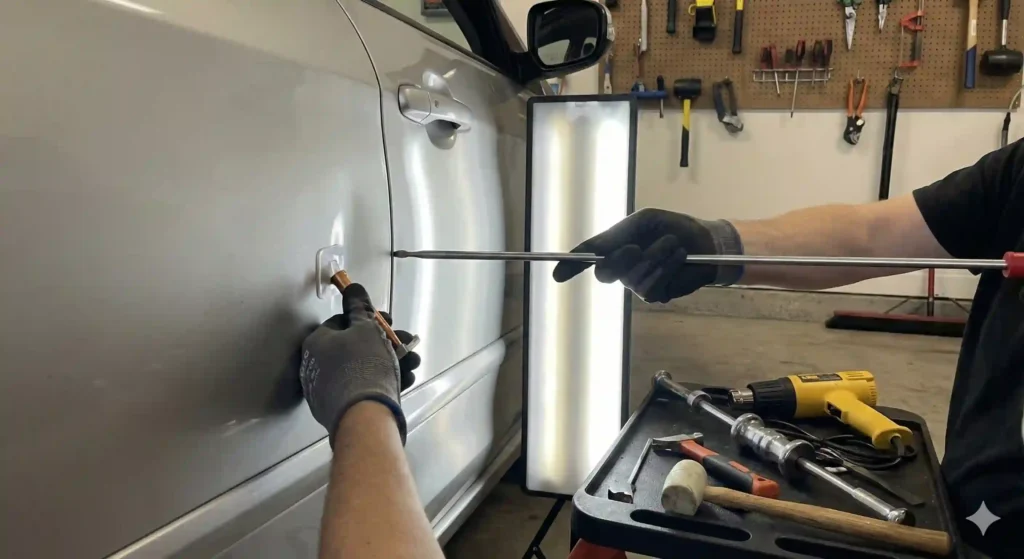
I’ll walk through the tools I reach for. These are the ones that helped me on warm Saturday drives and long winter nights in a cold shop.
PDR Rods and Bars (The Backbone of PDR Work)
Rods come in many shapes. Straight rods. Double-bend rods. Hooked rods. Each one gives you a different angle or reach. That’s why pros own a whole rack of them.
These rods slip behind doors and fenders. You feel the metal as you push. It’s slow work, but it’s steady. I still remember lying on a cold concrete floor one morning while pushing out a door ding. The rod did most of the job. My patience did the rest.
DIY users often struggle with rods because they can’t reach the back of the panel. Or they don’t have enough leverage. That’s when glue pulling becomes the backup plan.
Glue Pulling Tools
Glue pulling is simple. You heat the glue, place a tab on the dent, press it, and let it cool. Then you pull.
There are two types of glue guns—high-temp and low-temp. I use high-temp on cold days, like in Ohio or Minnesota winters. Low-temp works fine on mild days.
Tabs come in many shapes. Round tabs for small dings. Longer tabs for stretched dents. And every time you stick a tab on the car, there’s a small moment of hope. You wait to see if it holds strong enough to pull clean.
Dent Lifters & Slide Hammers
A dent lifter is a small lever you squeeze to lift the metal. It’s great for small dents. A slide hammer is for tougher dents. You pull it like a mini shock load.
I use the lifter when I want control. I use the slide hammer when the dent feels stuck. In a U.S. garage, where most of us work on concrete floors with limited space, the slide hammer can be tricky. Always wear gloves. These tools can pinch fast.
Tap-Down Tools & Mallets
After pulling a dent, you may see tiny high spots. Tap-down tools fix that. I use nylon tips for soft taps. Aluminum tips for sharp edges. Rubber mallets for gentle shaping.
The most common beginner mistake? Tapping too hard. I’ve done it. You learn to go light. Almost like tapping on a table to check if it’s hollow.
Reflective Light Board or LED Line Board
The lines help you see the low spots. Without the board, you’re guessing. With it, the dent shows up like a shadow.
Sunlight works. Shop lights work too. But the striped board feels like switching to HD vision. Once you use it, you can’t go back.
Heat Gun
Heat keeps the paint safe. Cold metal can crack. Cold paint can chip. In winter, I warm the panel like I’m warming my hands on a cup of coffee. Slow. Gentle. Not too close.
Wedges and Access Tools
Wedges open small gaps in doors. You slide them in. You twist a bit. And you get a clean opening to insert a rod.
Don’t pry too far. I once forced a panel more than I should have, and the clip popped out. Not fun. I learned my lesson.
Types of PDR Repairs You Can Do With These Tools
Not every dent is the same. Some dents roll out smooth. Others fight you all day. Here’s what I’ve learned.
Small Round Dents (Perfect for Beginners)
These are the easy ones.
- Parking lot dings
- Hail dents
- Door bumps
Use small rods or glue tabs. These dents pop out clean if you take your time.
Medium Dents in Doors or Fenders
These dents need more work. Rods give you steady control. Glue pulling helps when you can’t reach the back.
One Saturday, I fixed a dent on a friend’s truck fender. It took a couple hours. But the pull was clean. Felt good.
Creases or Long Dents
Creases need a slow rhythm. Push. Release. Push. Release. You can’t rush it. If you do, the metal oil cans.
This is where DIY becomes risky. Long dents reveal every mistake.
When PDR Won’t Work
There are dents you should not touch:
- Cracked paint
- Deep, sharp dents
- Body line dents at the edge
- Creases longer than your hand
If the paint is gone, PDR is done. Call a body shop.
DIY Dent Repair Kits vs Professional PDR Tools
I’ve used both. Some days the kit works fine. Other days it makes me wish I never touched the dent.
What DIY Kits Include (and What They Don’t)
Most kits include:
- A glue puller
- A few tabs
- A small lifter

What they lack:
- Long rods
- Specialized tips
- Good lighting
You can fix small dents. But not much more.
Why Pros Use More Advanced Tools
Pros own:
- Long reach rods
- Fog boards
- Hundreds of tips
- Dozens of tabs
They have skill. And years of muscle memory. That’s why they charge what they charge.
Cost Differences
- DIY kits: $25–$70
- Mid-level tools: $100–$400
- Pro tools: $1,000+
- Professional repairs: $75–$200 per dent
How to Choose the Right Dent Repair Tool for Your Situation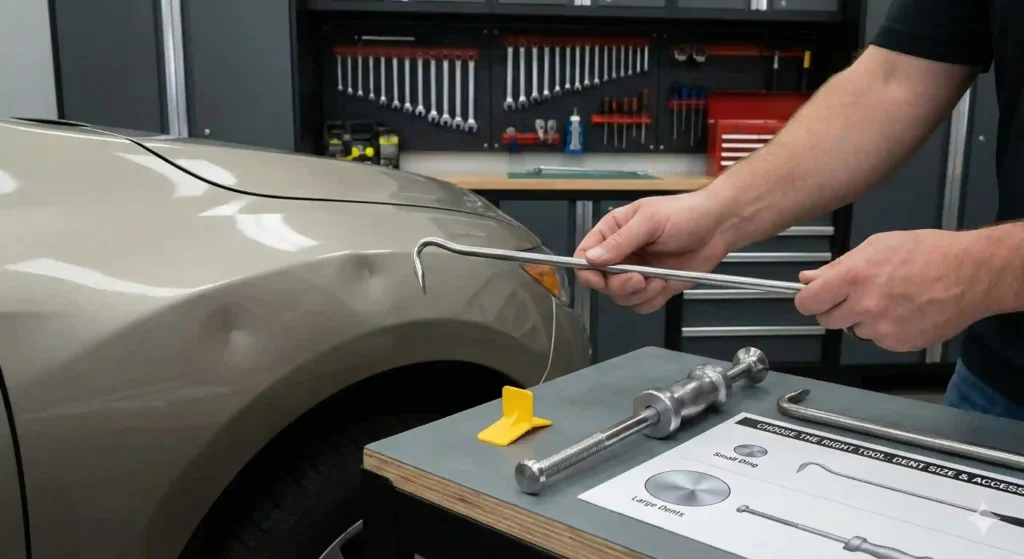
It all depends on dent size, access, and skill. Here’s how I choose.
Pick Tools Based on Dent Size
- Small dings → small rods, small tabs
- Quarter-sized dents → lifters or slide hammers
- Hand-sized dents → careful rod work or pro help
Pick Tools Based on Access
- Inner doors → long rods
- Fenders → hooked rods
- Hoods and trunks → mix of rods and glue tabs
- No access? → Glue pulling only
Look for Quality Materials and Safe Design
- Solid steel rods
- Heat-resistant glue sticks
- Comfort grips
- Stable lifters with strong feet
Cheap tools can slip. Slips can scratch paint.
Safety Tips for Using Car Paintless Dent Repair Tools
PDR looks soft. But the tools are real. And so are the risks.
Protect Your Paint
Warm the panel first. Work slow. Tap slowly. Don’t rush anything.
Protect Your Hands and Eyes
- Wear gloves
- Use safety glasses
- Keep rods steady
- Watch for hot glue
Protect Your Car Interior and Trim
Wedges can bend trim. Go easy. Never force a gap.
FAQs of Car Paintless Dent Repair Tools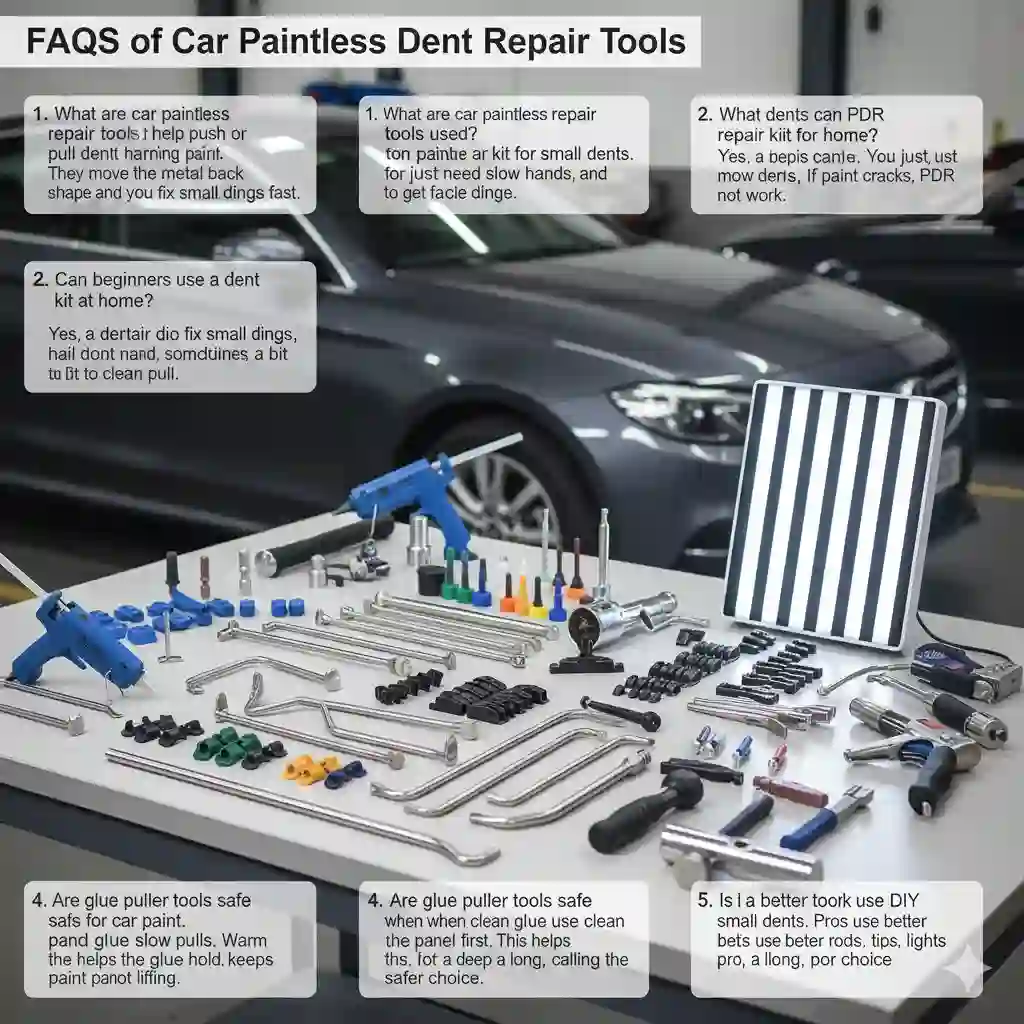
1. What are car paintless dent repair tools used for?
Car paintless dent repair tools help push or pull dents without harming paint. They move the metal back to shape and let you fix small dings fast.
2. Can beginners use a dent repair kit for cars at home?
Yes, a dent repair kit for cars works for small dents. The tools are simple. You just need slow hands and a bit of patience to get a clean pull.
3. What dents can PDR tools fix?
PDR tools can fix small dings, hail dents, and some medium dents. The paint must be fine. If the paint cracks, PDR will not work.
4. Are glue puller tools safe for car paint?
Glue puller tools are safe when you use clean glue and slow pulls. Warm the panel first. This helps the glue hold and keeps paint from lifting.
5. Is it better to use DIY PDR tools or hire a pro?
DIY PDR tools work for small dents. Pros use better rods, tips, and lights. If the dent is deep or long, calling a pro is the safer choice.
Final Thoughts on Using PDR Tools at Home
PDR feels like a skill you learn one dent at a time. Some days are smooth. Some days test your patience. But each repair teaches you something. The right tools help a lot. And knowing when to stop helps even more.