
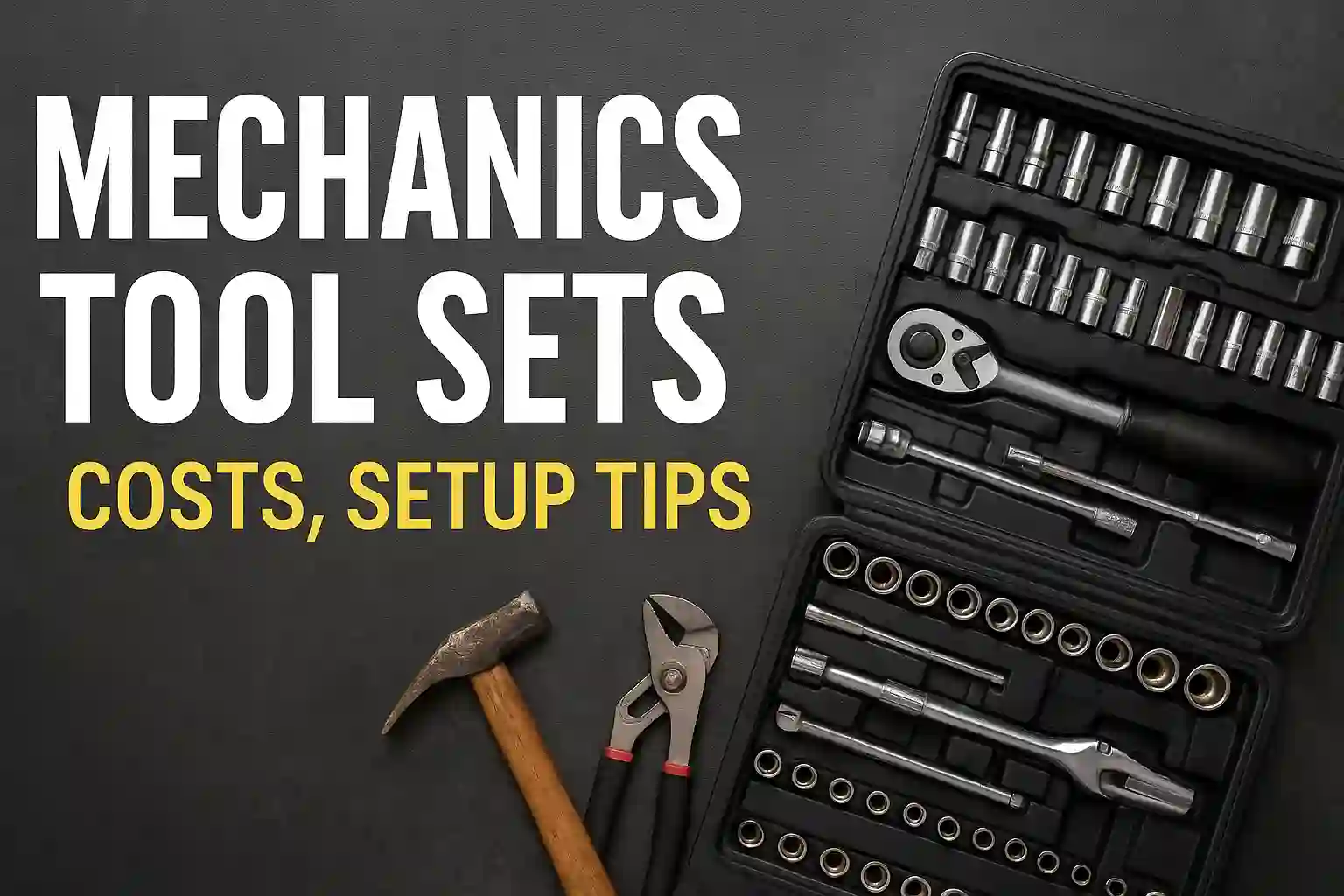
I’ve spent a good chunk of my weekends under cars or inside small garages. Some days it’s a humid Florida afternoon where every tool feels slippery. Other days it’s a cold Midwest morning when metal bites back. Over time, I learned that mechanics tool sets can save your day or ruin it. So I want to share what I’ve seen, felt, and messed up. Short and simple. No fancy words.
What Counts as a “Mechanics Tool Set”?
On a Saturday morning in my small garage in Ohio, I realized “mechanics tool set” means different things to different folks. Let’s keep it simple.
Core pieces
These are your bread and butter. You use them all the time.
Extra bits DIYers love
These fill gaps when you run into odd jobs around the car or house.
Why sizes matter
We use different drives for different tasks.
- ¼” for light work
- ⅜” for most jobs
- ½” for stubborn bolts
And yes, you’ll switch between metric and SAE depending on the vehicle. That’s normal in the U.S.
Common U.S. standards
Most good sets meet ANSI/ASME rules for strength and torque.
That keeps you safe when you pull on a breaker bar and hope the bolt moves.
How Much Does a Mechanics Tool Set Cost?
Prices swing a lot. One day you find a $69 set on sale at Home Depot, another day a $300 pro kit looks tempting.
Entry-level DIY sets ($40–$100)
- Good for light repairs
- Usually 60–120 pieces
- Great for oil changes or small jobs
A simple starter pick is the Crescent 170-Piece Mechanics Tool Set
Mid-range sets ($120–$250)
- Better ratchets
- Stronger cases
- Often 150–250 pieces
These feel nicer in the hand. I used a mid-range set for years in my old Michigan garage.
Pro-grade sets ($300–$600+)
- Chrome vanadium steel
- Tight tolerances
- Built for daily work
These are the sets you see in busy shops.
What affects price
- Material and finish
- Range of sockets
- Warranty
- Case quality
Sometimes you pay for extras you never use. Sometimes that extra deep socket saves your entire day.
What Makes a Good Mechanics Tool Set?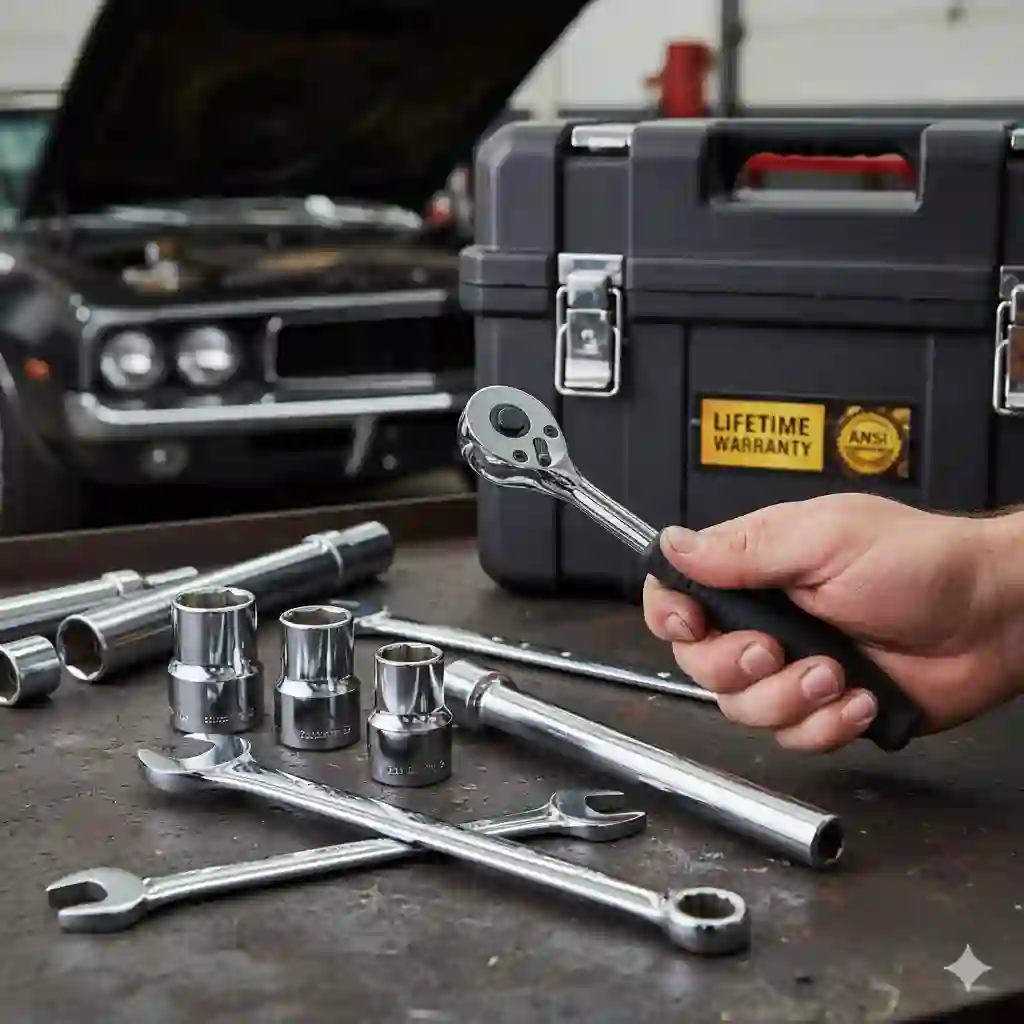
I’ve broken enough cheap ratchets to know what actually matters. Your knuckles will thank you.
Strong ratchet design
Fine teeth. Smooth swing. A solid click you can feel.
Socket quality
- 6-point for stronger grip
- 12-point for tight spaces
- Deep sockets for studs
Comfortable wrenches
Offset angles help. Anti-slip handles help even more when your hands are sweaty.
A case that stays shut
Nothing ruins a mood like opening your trunk and seeing sockets everywhere.
Lifetime warranty
A very U.S. thing. Brands like Craftsman and Kobalt built trust with this.
Safety
ANSI torque ratings keep you safe when you push tools hard.
How to Set Up a Mechanics Tool Sets Box
Tool boxes are like closets. If mine gets messy, I blame “future me,” which doesn’t work. So here’s what actually helps.
Start with the top drawer
Keep daily tools there:
- Ratchets
- Pliers
- Small wrenches
Middle drawers
Use rails. Sort sockets by drive.
Lower drawers
Heavier tools live here:
- Hammer
- Impact tools
- Large wrenches
Use foam organizers
DIY foam or pre-cut. Both work fine.
Label the drawers
You’ll find things faster.
Wipe tools clean
Oil and dust turn into rough grit that hurts grip and rusts metal.
Top 5 Types of Mechanics Tool Sets (Not Brands)
Instead of brand battles, here are the types of sets you’ll run into at any U.S. store.
General-purpose socket sets
Good for home and light auto work.
Simple. Affordable.
Automotive-focused sets
More extensions. Spark plug sockets. Helpful when working on tight bays.
Metric-only sets
Modern cars use metric. Clean layout. Fewer duplicates.
Large master sets
Great for growing garages.
Lots of tools. Takes space.
Portable emergency sets
Small. Light. Fits in the trunk.
Good for roadside repair.
When Should You Upgrade Your Mechanics Tool Sets?
If you feel annoyed every time you reach for something, that’s a sign.
Common upgrade signs
- Fasteners start stripping
- You miss deep sockets or extensions
- Newer vehicles need tighter-fit tools
- Something breaks under load
Your hands know the truth before your mind does.
Simple Buying Tips for First-Time DIY Mechanics
When I bought my first tool set, I judged it by the shininess. Don’t do that.
Smart tips
- Hold the ratchet. Feel it.
- Pick sets with useful pieces. Not filler bits.
- Check the hinges on the case.
- Skip sets that boost piece count with random bits.
- Choose easy U.S. warranty options.
- Think about your climate. Cold shops need better steel.
FAQs Of Mechanics Tool Sets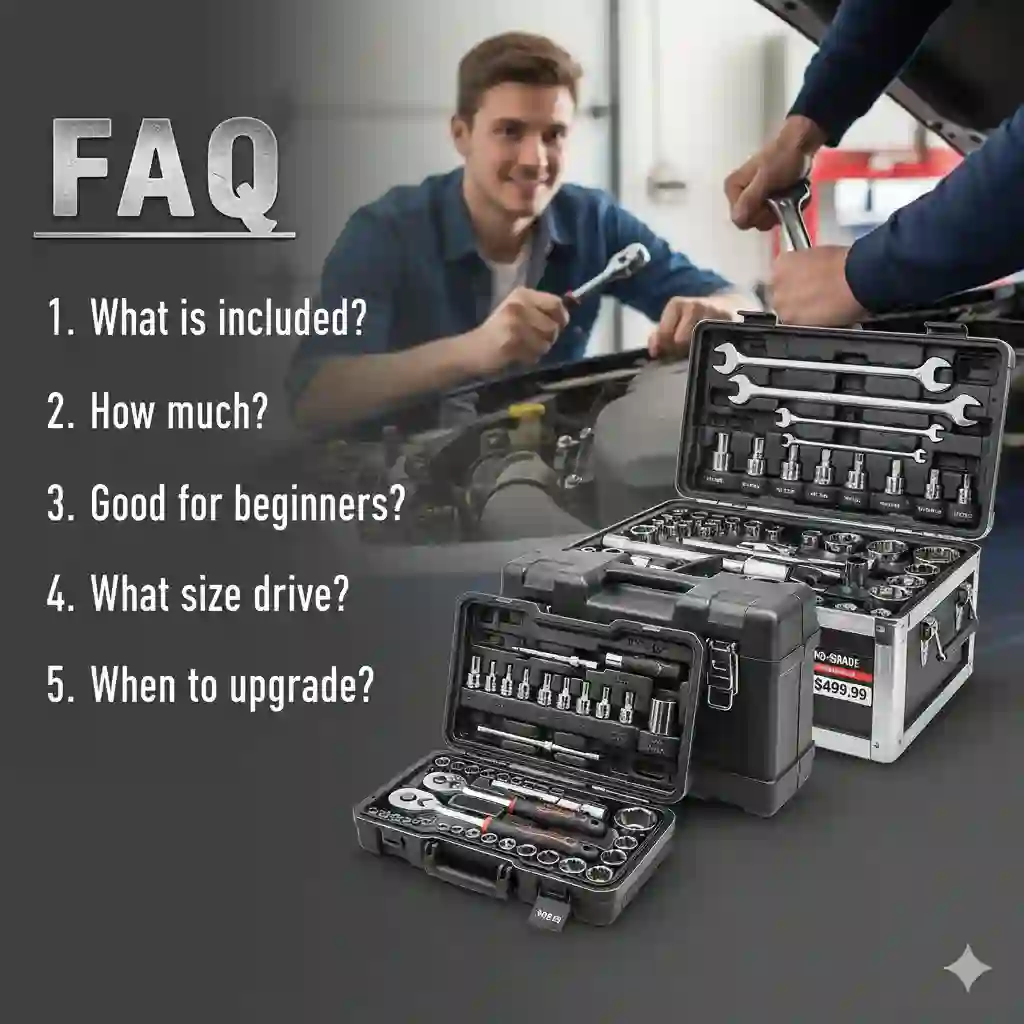
1. What is included in most mechanics tool sets?
Most mechanics tool sets include sockets, ratchets, and wrenches. You also get hex keys and bits. These cover most car and home repair jobs with ease.
2. How much should I spend on a mechanics tool set?
You can start small. Most good mechanics tool sets cost $40 to $150. You can spend more for pro work. It depends on what you fix and how often.
3. Are mechanics tool sets good for beginners?
Yes. A simple mechanics tool set helps you learn fast. The tools are easy to use and cover many tasks. It’s a smart first step for DIY work.
4. What size drive do I need for a mechanics tool set?
Most people use 1/4″, 3/8″, and 1/2″ drives. These cover light, medium, and heavy work. A set with all three lets you handle many repair jobs.
5. When should I upgrade my mechanics tool set?
Upgrade when tools slip, break, or feel weak. If you start car jobs that need deep sockets or more torque, it’s time for a stronger set.
Final Thought
If you like simple tools that feel good in the hand and work well for daily jobs, then a solid mechanics tool set will fit you. But if you need heavy torque or pro shop strength, you may want to look at bigger sets. I learned this the hard way on a cold night in my garage when a weak ratchet slipped and scared me a bit. So take your time, think about what you fix, and pick the set that feels right for your work and your hands.